
The Value of Alloying Elements
Why Recycling?
What makes tool steel, high-speed steel (HSS) and carbide valuable are the alloying elements they contain, such as tungsten, molybdenum, vanadium, cobalt and chromium. These elements are scarce in nature and can only be produced from ore through long, energy-intensive processes. When the scrap of these materials is recycled with its own kind, the value of the elements is preserved; when it is mixed into ordinary iron scrap, it is lost.
Valuable elements should be recycled with their own kind.
Below 1%
Tungsten content in ore is often this low; tonnes of rock are processed for a few kilograms of tungsten.
170 kg
Tungsten, molybdenum, chromium and vanadium in one tonne of M2 HSS scrap.
W · Co · V
Tungsten, cobalt and vanadium are on the European Union's list of critical raw materials.
01What Is an Alloying Element?
Steel is basically iron and carbon. Properties such as hardness, wear resistance, strength at high temperature and toughness come from alloying elements added to the iron in specific proportions. An HSS drill, for example, keeps its hardness even when it heats up during cutting, thanks to the tungsten, molybdenum and vanadium carbides it contains.
These elements make up only a few per cent of the material by weight, yet they are the component that determines both its performance and its market value.
The value of an alloyed metal is the value of the alloying elements it contains.
02Main Alloying Elements
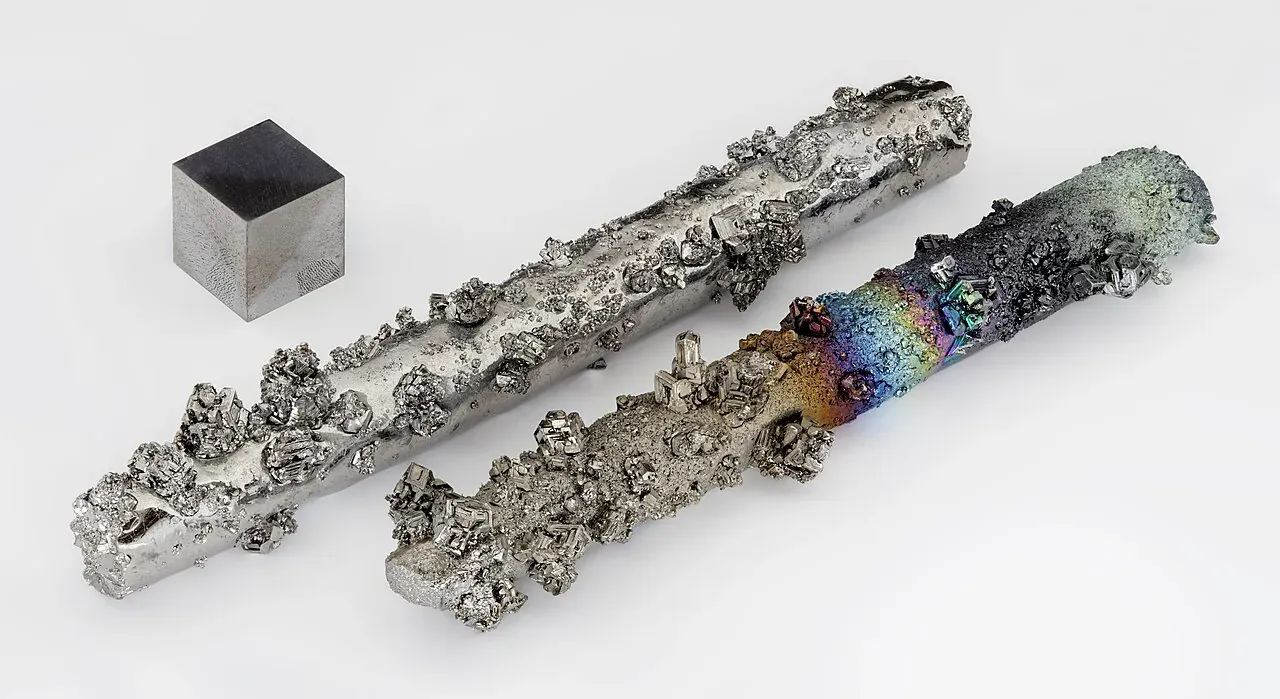
Tungsten (W)
Has a very high melting point and hardness. In HSS and hot work tool steels it retains hardness at high temperature; tungsten carbide (WC) is the main constituent of carbide (cemented carbide).
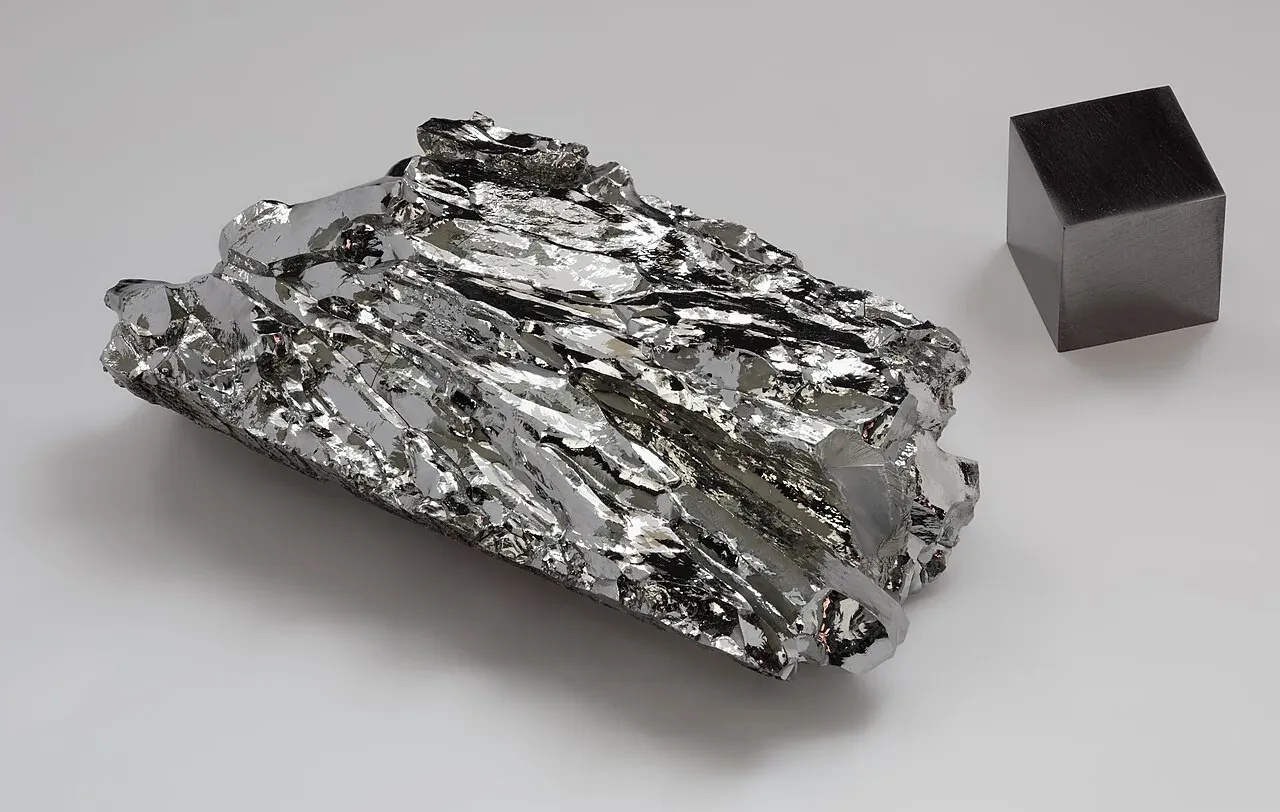
Molybdenum (Mo)
Increases hardenability and high-temperature strength. Used together with tungsten in HSS; in hot work tool steels it provides resistance to thermal fatigue.
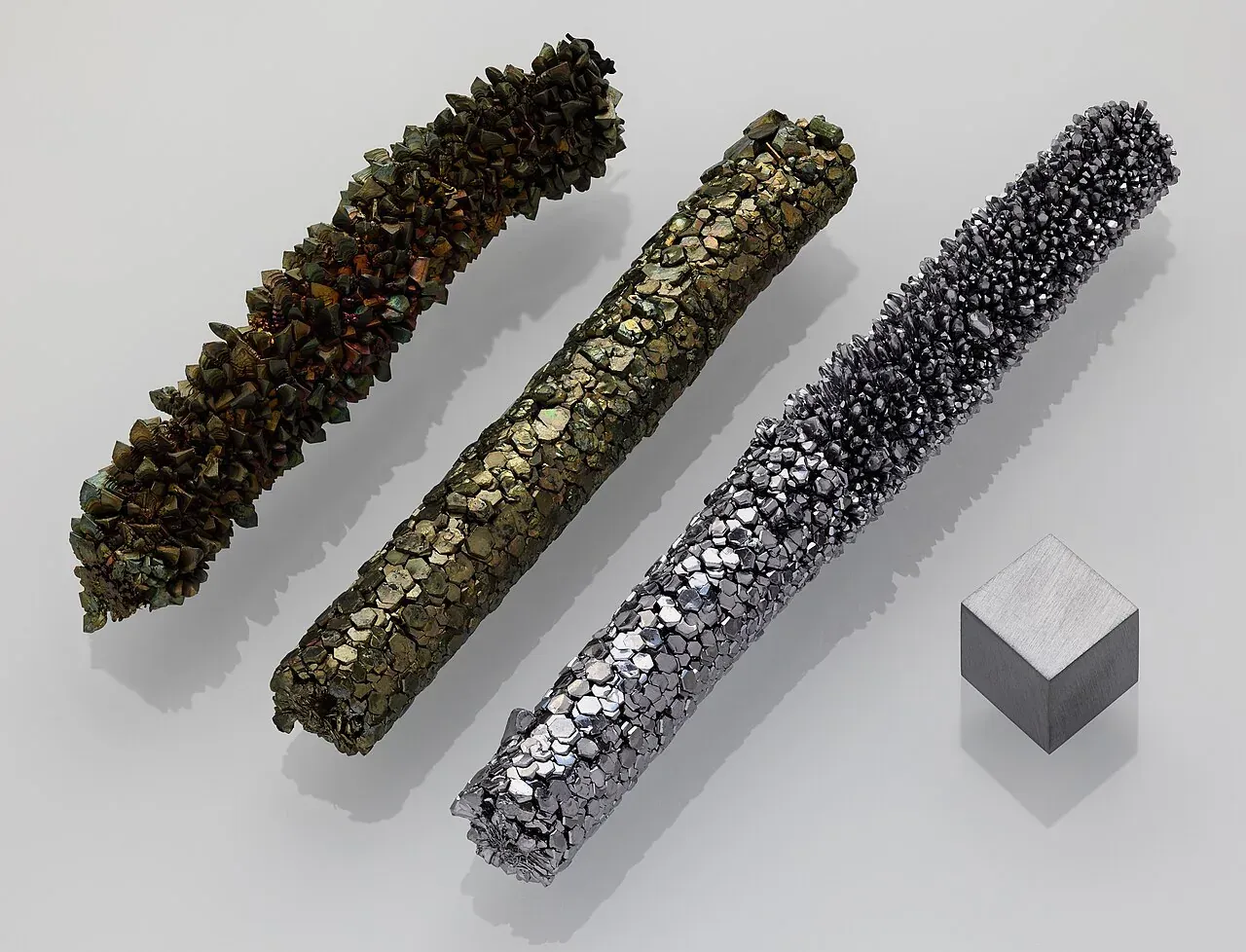
Vanadium (V)
Forms very hard vanadium carbides; increases wear resistance and refines the grain structure.
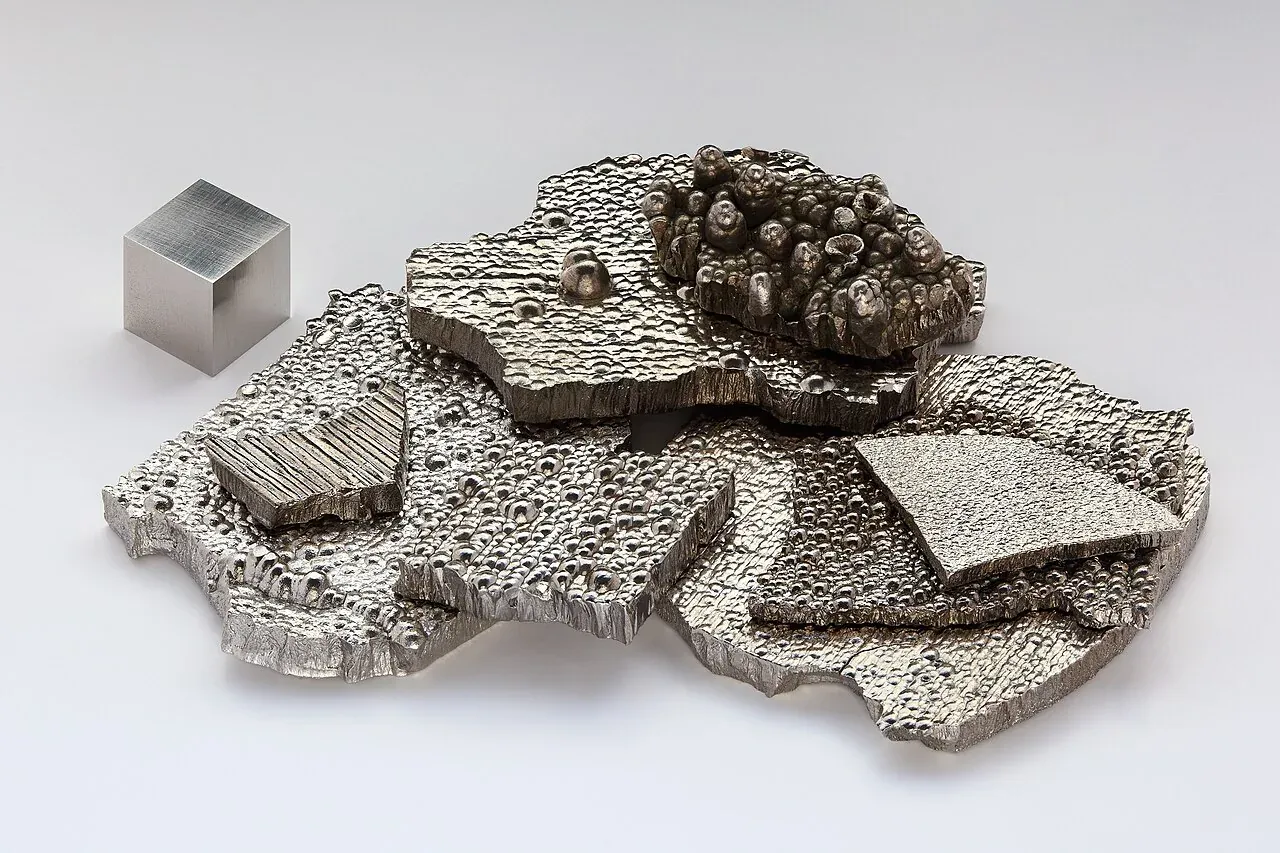
Cobalt (Co)
The binder that holds tungsten carbide grains together in carbide. In cobalt HSS (e.g. M42) it increases hardness at high temperature.
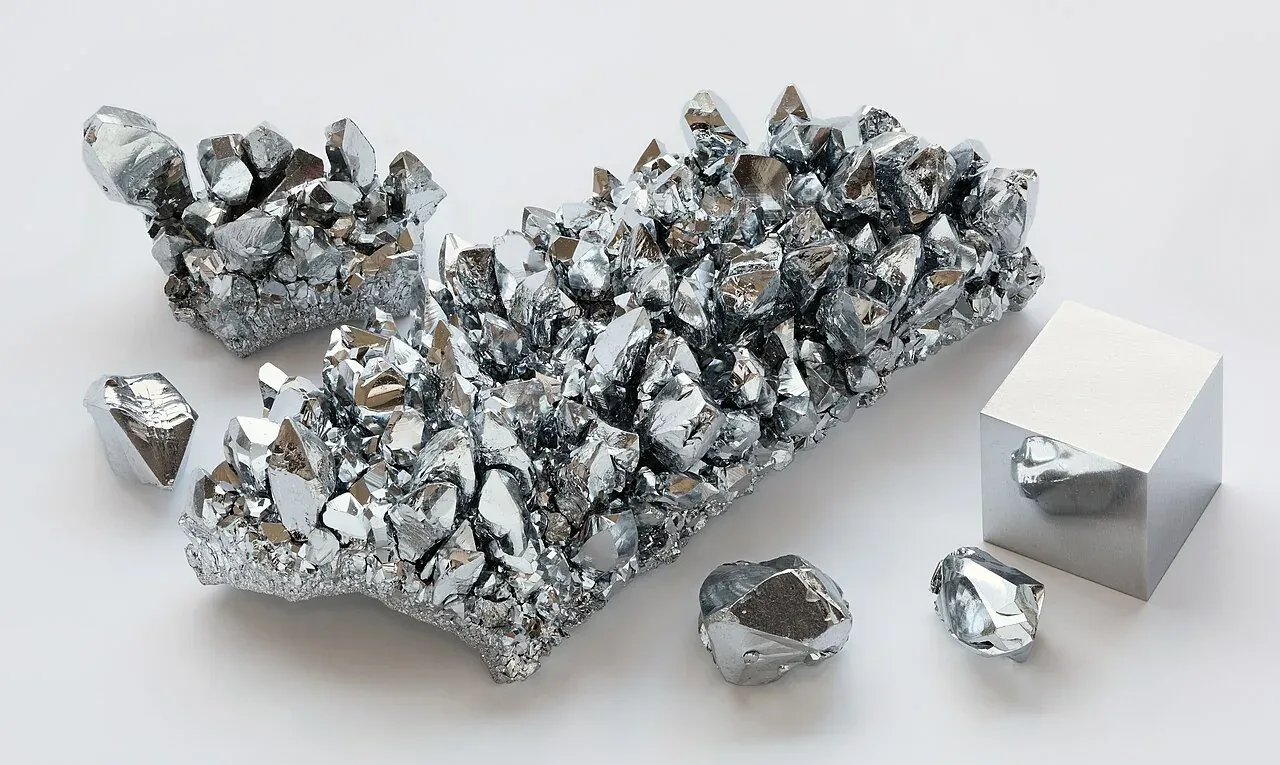
Chromium (Cr)
Provides hardenability, wear and corrosion resistance. Present in high proportions in cold work tool steels (e.g. 1.2379).
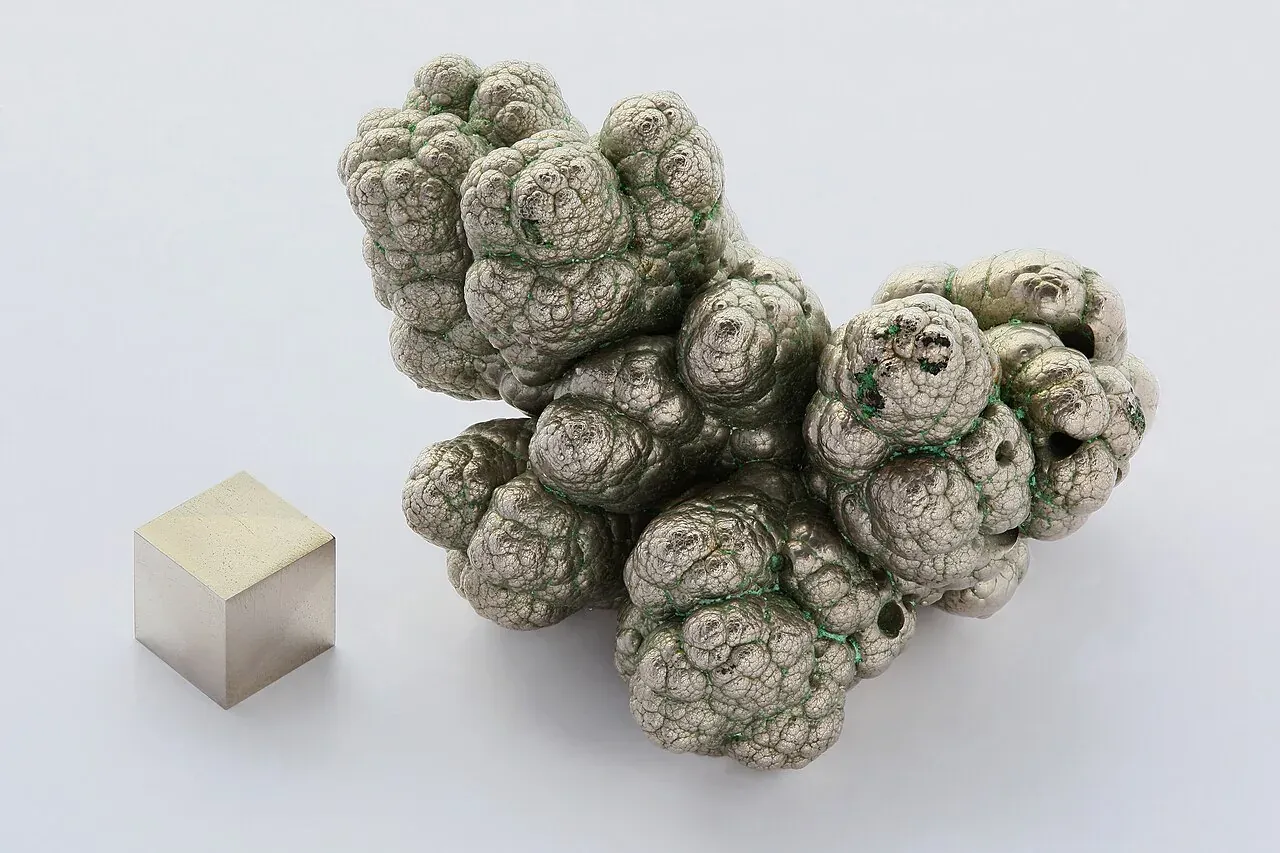
Nickel (Ni)
Gives toughness and corrosion resistance; the base element of stainless steels and nickel-based superalloys.
Photos: Alchemist-hp (pse-mendelejew.de), Wikimedia Commons, Free Art License 1.3.
03How Are These Elements Obtained?
Alloying elements are obtained from ores through long, energy-intensive stages: mining, concentration, chemical processing and smelting. Tungsten is produced from wolframite and scheelite ores; the tungsten content of the ore is usually below one per cent, so tonnes of rock are mined and processed for a few kilograms of tungsten.
A significant share of molybdenum is a by-product of copper mining, and most cobalt is a by-product of copper and nickel mining. Vanadium is mostly recovered from slags produced when processing vanadium-bearing iron ores. Chromium is produced from chromite ore as ferrochrome.
Production of these metals is concentrated in a few countries worldwide. Tungsten, cobalt and vanadium are on the European Union's list of critical raw materials: their supply is limited, their prices are volatile and their strategic importance is high.
04Contribution to Production and Industry
Tool steels, HSS and carbide made possible by alloying elements form the basis of production in almost every branch of industry:
- Cutting tools: drills, milling cutters, taps, saws and inserts (HSS and carbide)
- Mould and die making: plastic injection, die casting, forging and extrusion dies (hot and cold work tool steels)
- Machining: high-speed cutting on CNC milling machines and lathes
- Defence and aerospace: high-strength parts and superalloys
- Automotive and white goods: series production with moulds and tooling
- Energy and mining: wear-resistant parts and drill bits
05How Does Recycling at Source Work?
- 01
Sorting
Scrap is collected separately by type where it is generated: carbide, HSS, cold work and hot work tool steel are not mixed with each other or with ordinary iron scrap.
- 02
Analysis
The composition of the scrap is determined with chemical analysis and alloy verification devices, and it is assigned to the correct grade.
- 03
Like-for-Like Recovery
The scrap is directed to plants that produce the same alloy group: HSS becomes HSS again, carbide becomes carbide raw material again.
- 04
Value Preserved
The alloying elements go back into production at the same value, without being mined again.
06What Happens If It Is Not Recycled With Its Own Kind?
When tool steel and HSS scrap are mixed with ordinary iron scrap, they usually end up in furnaces producing low-alloy products such as reinforcing bar. In these furnaces part of the tungsten, molybdenum and vanadium oxidises into the slag; the rest is diluted in tonnes of iron and serves no purpose. Valuable alloyed scrap is effectively sold at the price of iron scrap. These elements can also change the composition of the steel produced in an undesirable way.
Carbide scrap that is not collected by type is likewise lost in mixed scrap or waste; its tungsten and cobalt cannot be recovered.
In the end, valuable elements extracted from mines with great effort are lost, and the same elements have to be mined again.
Valuable scrap that is not sorted at source goes at the price of iron.
07An Example: 1 Tonne of M2 HSS Scrap
The widely used M2 (1.3343) high-speed steel contains approximately 6% tungsten, 5% molybdenum, 4% chromium and 2% vanadium. So one tonne of M2 scrap contains roughly 60 kg of tungsten, 50 kg of molybdenum, 40 kg of chromium and 20 kg of vanadium.
When this scrap is recycled as HSS, these elements are reused in new HSS production. When it is mixed into reinforcing-bar scrap, the same tonne is sold at the price of iron scrap and the alloying elements in it are lost.
08Contribution to the Environment and the Economy
Recovery from scrap consumes far less energy than production from ore and reduces the waste and emissions caused by mining, transport and chemical processing, shrinking the carbon footprint of every tool, mould and cutting insert produced. Recovering valuable scrap generated in our country at its true value also reduces dependence on imported raw materials.
One of the easiest steps on the road to net zero carbon is not to lose the valuable material we already have.
Scrap recycled with its own kind is the raw material of a green future.
Every tonne of scrap used in steel production saves:
- of CO₂ emissions avoided1.5 tonnes
- of iron ore left unmined1.4 tonnes
- of coal not burned740 kg
- of limestone not used120 kg
Source: worldsteel, Scrap Fact Sheet (2021)
Recycled tungsten in carbide, compared with primary tungsten
Source: BMW Group, tungsten recycling press release (June 2021)
Türkiye and Scrap
- No. 1Largest seaborne scrap importer in the world
- ~75%Share of scrap needs met by imports
- 18.7 MtScrap imported in 2025
Losing valuable scrap generated here means buying the same back from abroad with foreign currency.
Sources: Argus (March 2026), BigMint (February 2026)
Let Us Evaluate Your Scrap by Type
Collect your carbide, HSS, cold work and hot work tool steel scrap separately; we examine it with chemical analysis and alloy verification methods and price it at its true value.
Get a Scrap QuoteTwo Paths for Your Scrap
Recycled with its own kind
- HSS becomes HSS again, carbide becomes carbide raw material again
- Alloying elements return to production at the same value
- No new mining is needed for the same elements
- The carbon footprint of production shrinks
Mixed into iron scrap
- It goes to melting furnaces producing reinforcing bar
- Part of the elements is lost to slag, the rest is diluted in the iron
- Valuable scrap is sold at the price of iron scrap
- New mining and production enlarge the carbon footprint
Inside One Tonne of M2 HSS Scrap
170 kg of alloying elements
- W60 kgTungsten
- Mo50 kgMolybdenum
- Cr40 kgChromium
- V20 kgVanadium
Who Pays the Price of Mixed Scrap?
01The seller
02Industry
03The country
04Nature
Correctly sorted scrap comes back as profit for the seller, raw material for industry, foreign currency savings for the country and lower carbon for nature.
Lower Carbon, a Green Future
CO₂ ↓
Carbon Footprint
Alloying elements recovered from scrap return to production while skipping mining, beneficiation and long-distance transport. The carbon footprint of the same tool, mould or cutting insert shrinks.
Net 0
Net Zero Target
Türkiye has announced a 2053 net zero emissions target, and the European Union prices the carbon footprint of imported steel through its Carbon Border Adjustment Mechanism (CBAM). Scrap recycled with its own kind contributes directly to industry reaching these targets.
Green Future
Keeping valuable elements in the loop means leaving mines, energy and nature to future generations. Every kilogram of scrap you sort is an investment in a green future.
Need help?
To sell your scrap, simply contact us by phone or WhatsApp.